Selected Works
Undergraduate Thesis
Exploring Nature-resident Connectedness and Resident Attitudes Towards Tourism: Evidence from a Coastal Destination of Bangladesh
- Course: URP 4000: Project / Thesis
- Supervisor: Dr. Md. Abdul Wakil
Publication: [DOI: 10.1016/j.jort.2025.100885]
- Description: Combining the Nature’s Contributions to People (NCP) framework and Weber’s Theory of Formal and Substantive Rationality (WFSR), this study investigated how residents’ connection to nature empowers them through tourism and influences support for local tourism initiatives in Cox’s Bazar.
- Objectives:
- Measure nature connectedness levels among coastal residents.
- Analyze the impact of nature connectedness on perceived empowerment from tourism.
- Key Findings & Implications: Residents exhibit a strong connection to nature that positively drives support for tourism. However, concerns regarding over-tourism highlight the urgent need for sustainable, nature-aligned planning models that respect community environmental values.
Transportation & Regional Planning Studios
Analyzing School-Based Trip Patterns in Rajshahi City: A Comprehensive Transportation Study
- Course: URP 4128: Transportation Planning Studio
- Instructors: Assistant Professor Muhammad Waresul Hasan Nipun, Assistant Professor Md. Shakil Ar Salan
- Objectives:
- Assess school-based trip pattern characteristics across Rajshahi City.
- Evaluate the adequacy and efficiency of transportation infrastructure surrounding urban school zones.
Download Transportation Slides (PDF)
Understanding the Economic Dynamics of the North-Eastern Tea-Producing Region of Bangladesh
- Course: URP 4114: Regional Planning Studio
- Instructors: Assistant Professor Anutosh Das, Assistant Professor Sumita Roy
- Objective: Examine the economic dynamics of Bangladesh’s north-eastern tea-producing region using a combined short-run and long-run analytical framework.
Download Regional Planning Slides (PDF)
Landscape Planning Studio & Presentations
Center for Development of the Physically Challenged
- Course: URP 3216: Landscape Planning Studio
- Instructors: Assistant Professor Muhammad Waresul Hasan Nipun, Assistant Professor Sumita Roy
- Project Team: Md. Arshadul Islam, Khayrul Alom Tuhin, Fowzia Anwar, Huzaifa Ibne Shakir
- Tools Used: AutoCAD, SketchUp, Enscape
Special Acknowledgments: Associate Professor Dr. Md. Abdul Wakil, Assistant Professor Anutosh Das
- Overview: A 7-acre master plan envisioning a comprehensive, accessible rehabilitation complex near Nader Hajir Mor, Rajshahi. The site integrates educational, athletic, residential, medical, and administrative zones into a self-healing environment.
Presentation 1: Identifying Principles & Elements of a Landscape
- Course: URP 3216: Landscape Planning Studio
- Objective: Identify foundational elements and principles of landscape design from a field-selected area.
Download Landscape Principles Slides (PDF)
Presentation 2: Shrubs as a Landscaping Element
- Course: URP 3216: Landscape Planning Studio
- Objective: Identify shrub varieties, growth characteristics, and visual roles on a selected site.
Download Shrubs Landscaping Slides (PDF)
Rural Planning Studio
Factors Affecting Extent of Rural Livelihood Diversification: A Case Study of Noahata Union, Rajshahi
- Course: URP 3112: Rural Planning Studio
- Instructors: Associate Professor Dr. Md. Abdul Wakil, Assistant Professor Dulal Sarker
- Objectives:
- Determine the extent and drivers of livelihood diversification using an OLS Regression model.
- Identify targeted diversification strategies for zero-diversified rural households.
Download Livelihood Diversification Slides (PDF)
Basic Design Projects
Bas-Relief and Serial Plane
- Course: URP 1116: Basic Design
- Instructors: Assistant Professor Ferdous Farhana Huq (Retd.), Assistant Professor Anutosh Das
Recognition: Project selected for inclusion in the Departmental Basic Design Magazine as an inspirational benchmark for incoming students.
- Key Learning Objectives:
- Bas-relief: Spatial awareness, 3D form composition, and depth perspective.
- Serial Plane: Practical color theory, abstraction vs. representation, form-function relationships, and sustainable material choice.
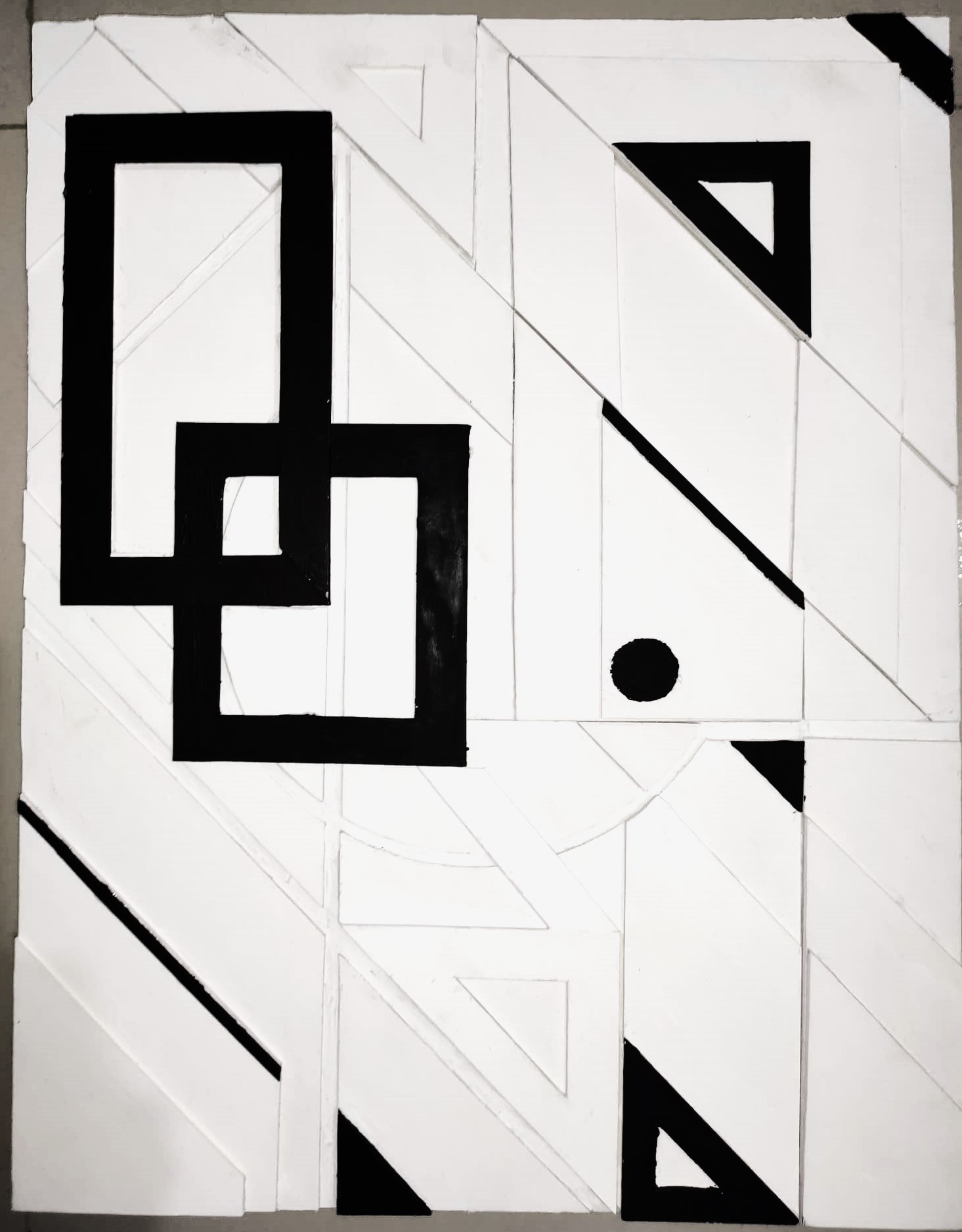
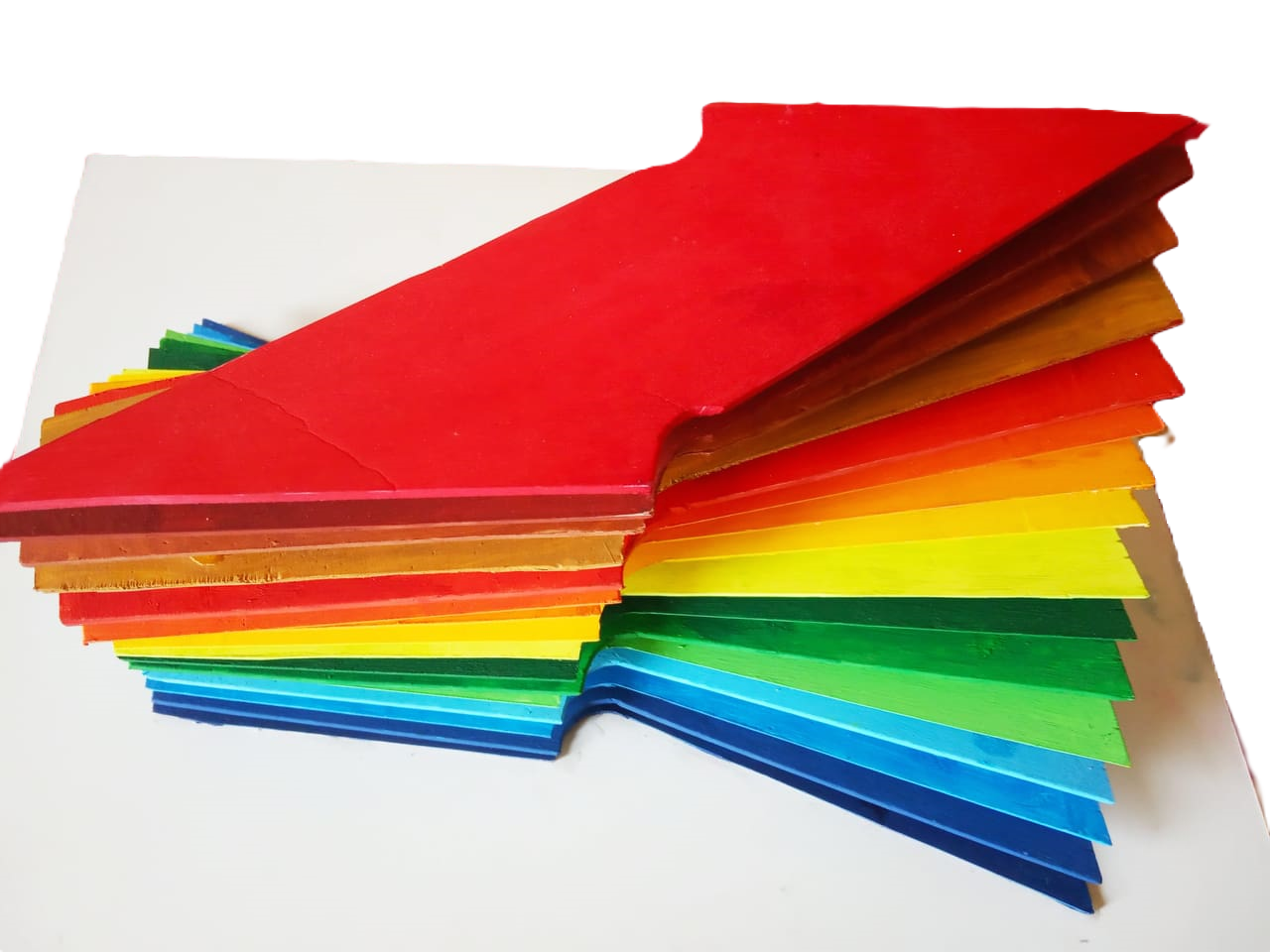
Figure 2: Bas-Relief (Left) and Serial-Plane (Right) physical models.
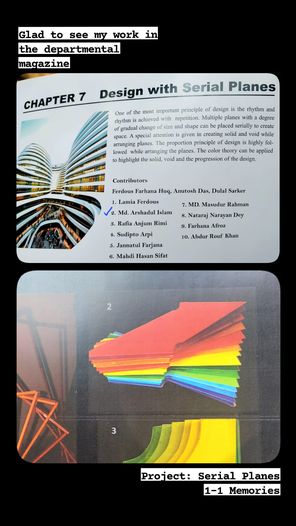
Figure 3: Serial-Plane feature published in the RUET URP Departmental Basic Design Magazine.